



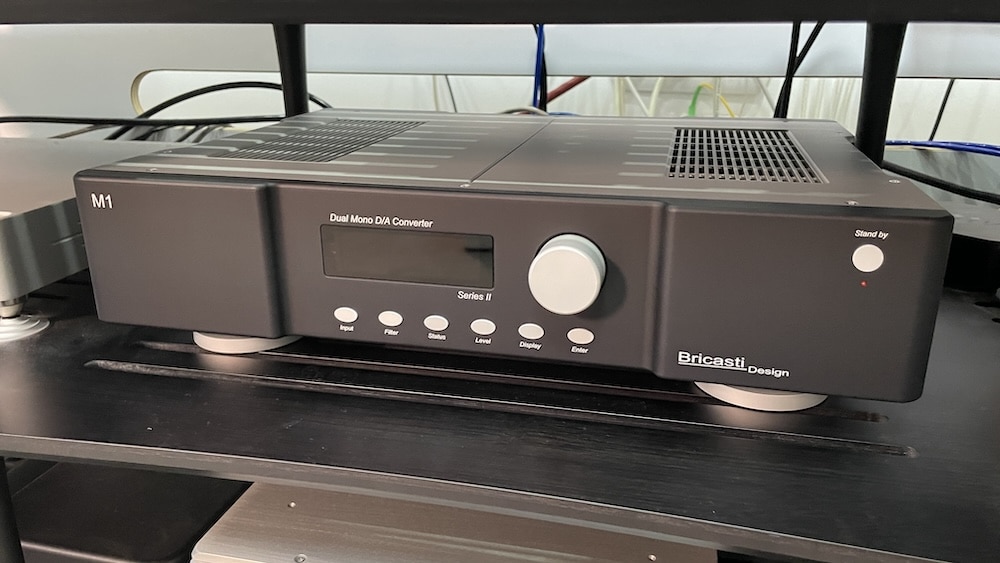
This time we received for review the Bricasti Design M1 Series II, a high-end DAC with an integrated streaming module from the American boutique manufacturer. The brand has only recently entered the Israeli market. In this review, we will examine the features and performance of the M1 S2 and compare it to another high-end DAC in its class.
We would like to thank Audio Video, the official importer of Bricasti Design in Israel, for providing the unit for this review.
Bottom Line
The Bricasti Design M1 S2 is a mature, precise and highly musical DAC, combining excellent build quality with audiophile-level sonic performance

Liked
- Excellent build quality and a clear sense of premium craftsmanship
- Outstanding dynamics and the ability to convey musical energy and drama
- A wide range of digital inputs, including USB
- An optional internal streamer that delivers impressive performance and can compete with external solutions
- A cohesive, well-rounded overall package

Improvement Points
- The internal streamer is more limited in terms of supported applications and does not offer support for Spotify Connect or Tidal Connect
About Bricasti Design
Bricasti Design is an American company specializing in high-end audio equipment for both the professional and audiophile markets. It was founded in 2004 in Massachusetts, USA, by two audio industry veterans, Brian Zolner and Casey Dowdell. The name “Bricasti” is derived from a combination of their names (“Bri-Cas-ti”). Both founders bring extensive experience in the development and implementation of digital and professional audio technologies, including many years at Lexicon, one of the most respected companies in the field of digital audio processing.
Today, Bricasti Design offers a broad and diverse product lineup that includes DACs, digital and network sources (including a streamer and a CD/SACD transport), preamplifiers, power amplifiers, and monoblock amplifiers. All models are designed and manufactured in the United States with a strong emphasis on engineering, meticulous construction, advanced noise and jitter reduction technologies, and high-quality analog circuitry.
The company hand-builds its products in the United States, using aluminum chassis and architectures designed to deliver very high levels of performance in terms of resolution, dynamic range, and sonic accuracy. Bricasti’s team includes experienced DSP (Digital Signal Processing) engineers, enabling the company to develop both the hardware and software in-house and to provide long-term updates and support.
Under Review: Bricasti Design M1 Series II
The Bricasti Design M1 Series II (hereafter referred to as the M1 S2) is a high-end DAC based on a dual-mono architecture, featuring two linear power supplies with high current capability and increased capacity compared to the previous generation. At the heart of the unit is the company’s advanced MDx processor, which integrates the USB receiver, master clock, DAC chips, and DSP platform. This processor enables sophisticated signal handling, including upsampling, filter management, and the preservation of a clean digital signal with exceptionally low jitter.
In terms of digital inputs, the M1 S2 offers a comprehensive selection, including USB, coaxial, optical, AES/EBU, and BNC. In addition, there is a network input that can be used for streaming when equipped with the optional streaming module. This same input can also function as an I²S interface – a standard that has gained popularity in recent years – when used with compatible sources such as the company’s SACD transport.
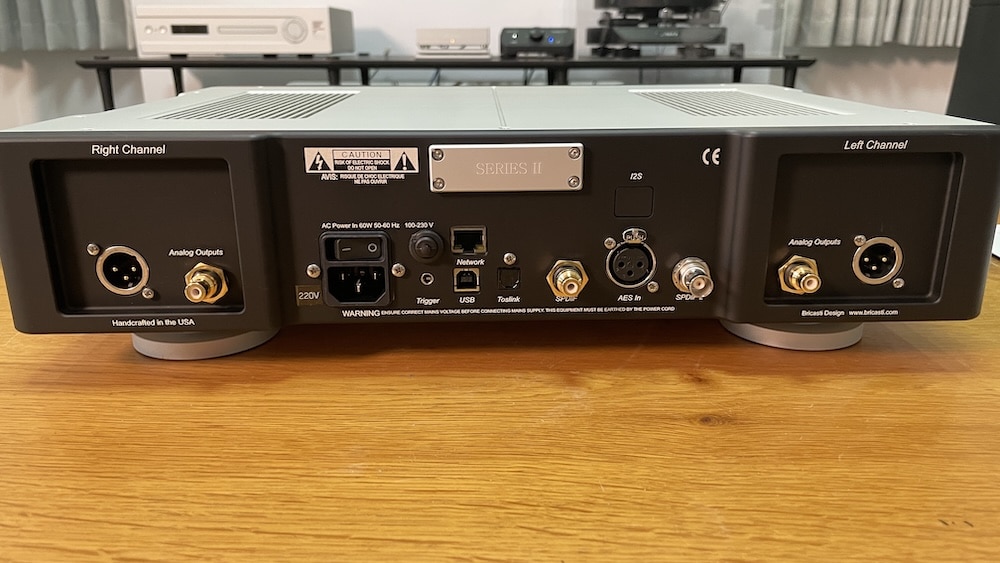
Regarding format support: all inputs except USB support PCM up to 192kHz. The USB input supports PCM up to 384kHz, as well as DSD up to DSD256, whether via Native DSD or DoP (DSD over PCM). Over the network input, support is similar to USB, though DSD is limited to DSD128.
On the output side, the M1 S2 provides both types of analog outputs: single-ended RCA and balanced XLR. The outputs are physically arranged so that each channel occupies its own side of the chassis, further reflecting the unit’s fully separated design.
The optional streaming module for the Bricasti Design M1 S2 is primarily aimed at audiophiles who use advanced music playback software such as Roon, Audirvana, JPLAY, and JRiver Media Center. However, it does not offer support for Spotify Connect or Tidal Connect, nor does it include more general-purpose protocols such as DLNA or AirPlay.
The unit’s dimensions are 43.2 cm wide, 30.5 cm deep, and 11.4 cm high. Its weight is 6.8 kg.
Design and Build Quality
The unboxing video:
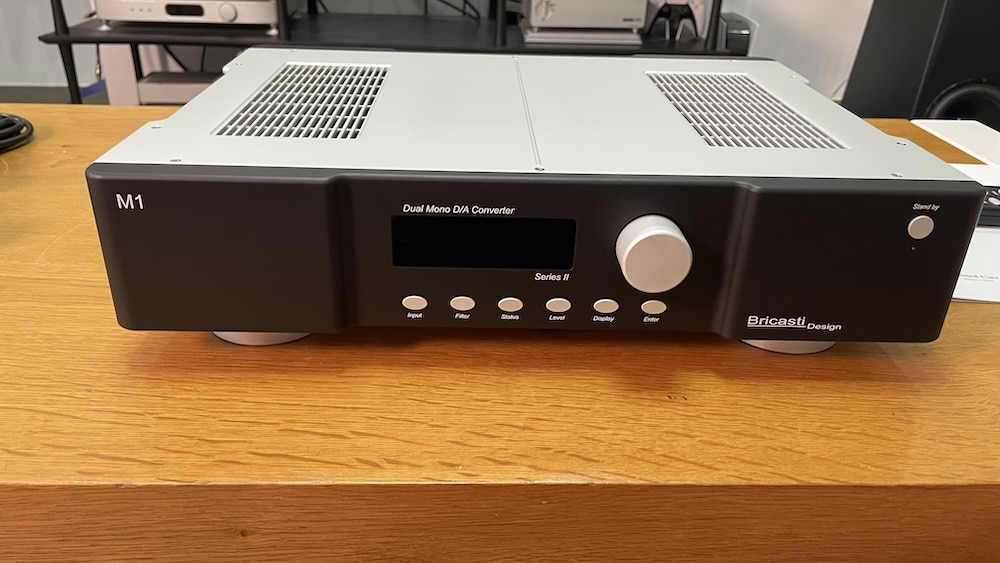
The design of the Bricasti Design M1 S2 conveys industrial maturity, precision, and restraint. It is a clean design, free of unnecessary gestures, clearly emphasizing the unit’s internal architecture: a three-part layout. The separated analog channels are positioned on either side, with the control and processing section placed at the center. This concept is not limited to the internal structure alone; it is consistently reflected in the external design language and front panel layout.
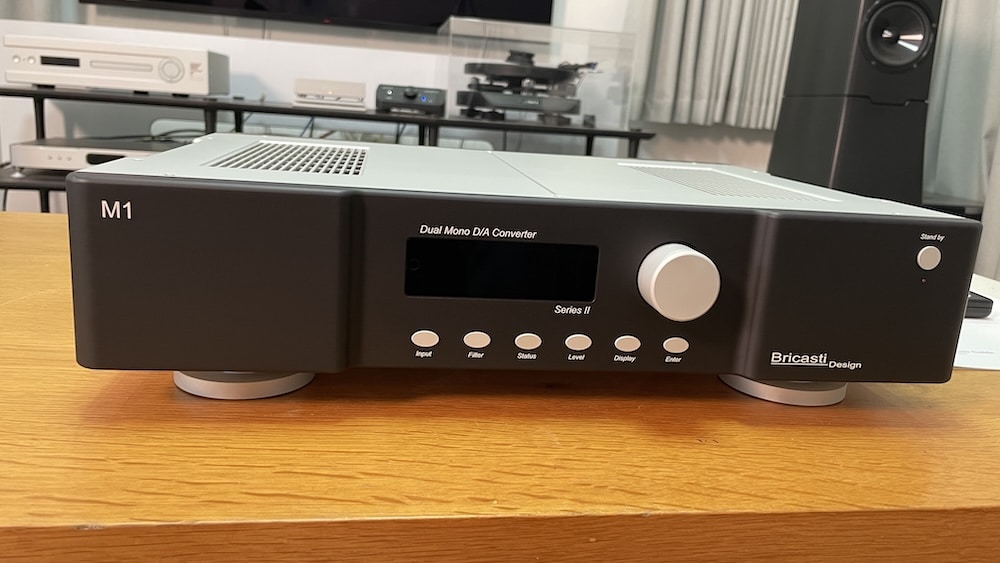
The chassis is made of aluminum and finished to a high standard. The sense of quality extends to the smaller details – the selector, the buttons, and the overall user interface. The display is sufficiently large and clear, presenting relevant information in an easy to read manner, including input selection, volume level, and incoming signal data.
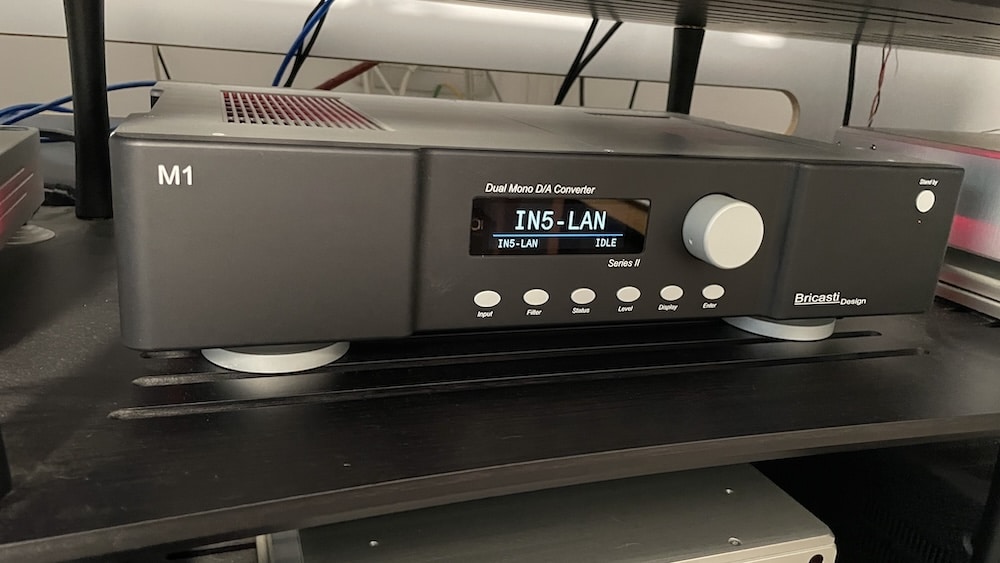
It is difficult to ignore the design affinity with the classic American tradition of manufacturers such as Lexicon, Madrigal Audio Laboratories, and Mark Levinson. The founders of Bricasti come from professional backgrounds in these companies, and the influence is evident in the straight lines, balanced proportions, and the restrained yet authoritative approach.
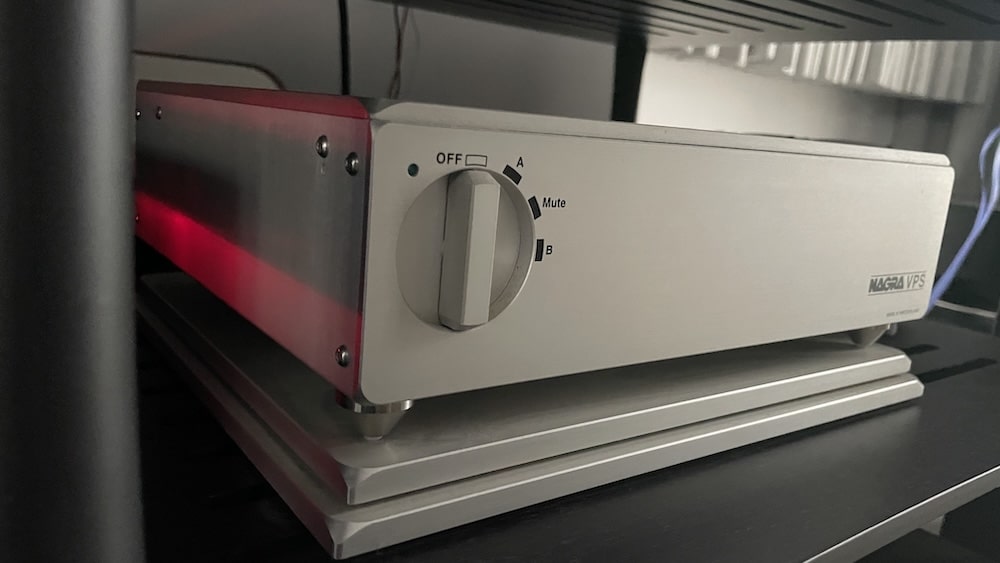
There is one design element I felt less enthusiastic about. Inside the unit, several red LEDs are installed, and due to the side ventilation openings, the light spills outward and diffuses around the chassis. In my view, the illumination is slightly too prominent, and I would have preferred to rely solely on the front-panel status indicator.
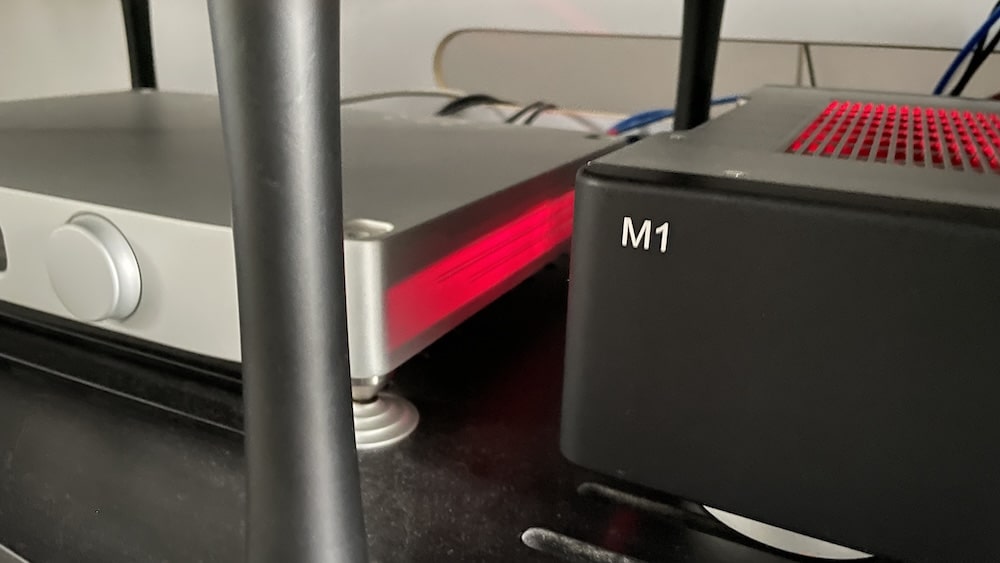
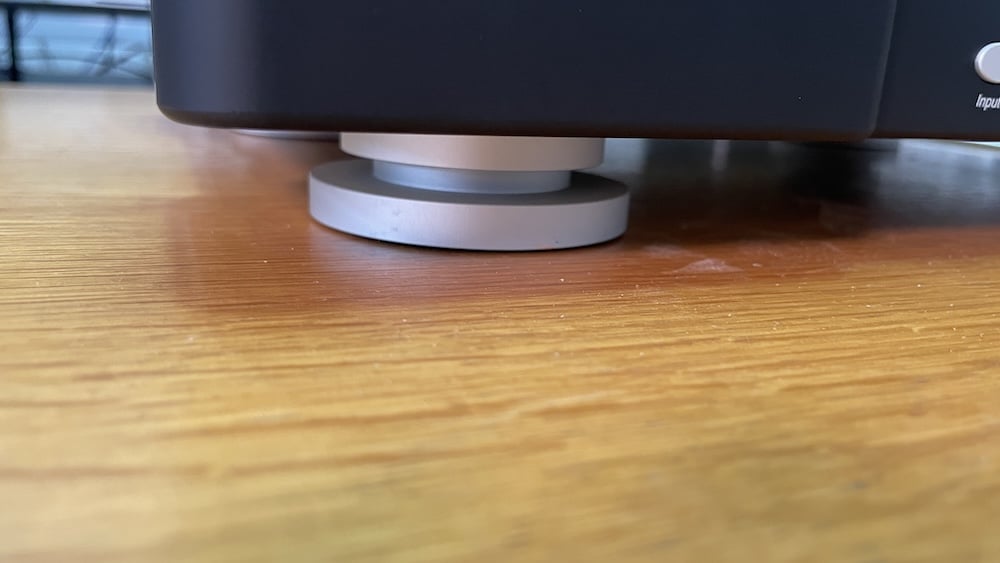
On the other hand, my favorite design element is the substantial, solid feet. They provide the unit with a stable foundation, proper isolation, and effective mechanical damping, conveying thoughtful engineering down to the smallest detail. It is an aspect I would be pleased to see receive similar attention from more manufacturers.
User Experience
The user experience of the Bricasti Design M1 Series II can be divided into two layers: everyday operation and system setup/configuration. Day-to-day use, such as switching between inputs, adjusting volume, and streaming is very intuitive. Operation is based on first selecting the desired function via the front-panel buttons (inputs, volume level, or filters, which I will elaborate on in the listening section), and then adjusting the value using the rotary selector. I particularly appreciated the fact that, by default, the selector does not control volume, significantly reducing the risk of unintended level changes.
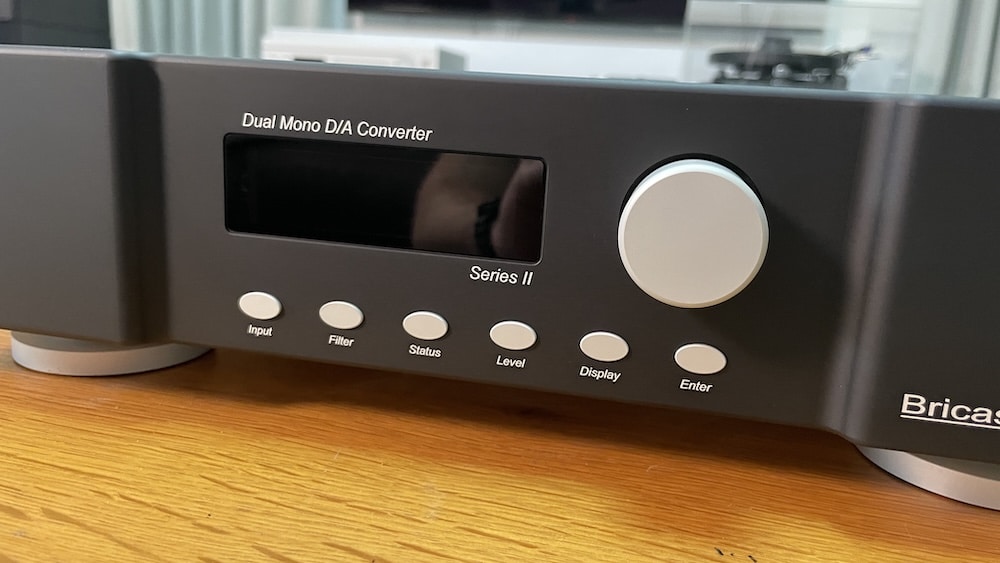
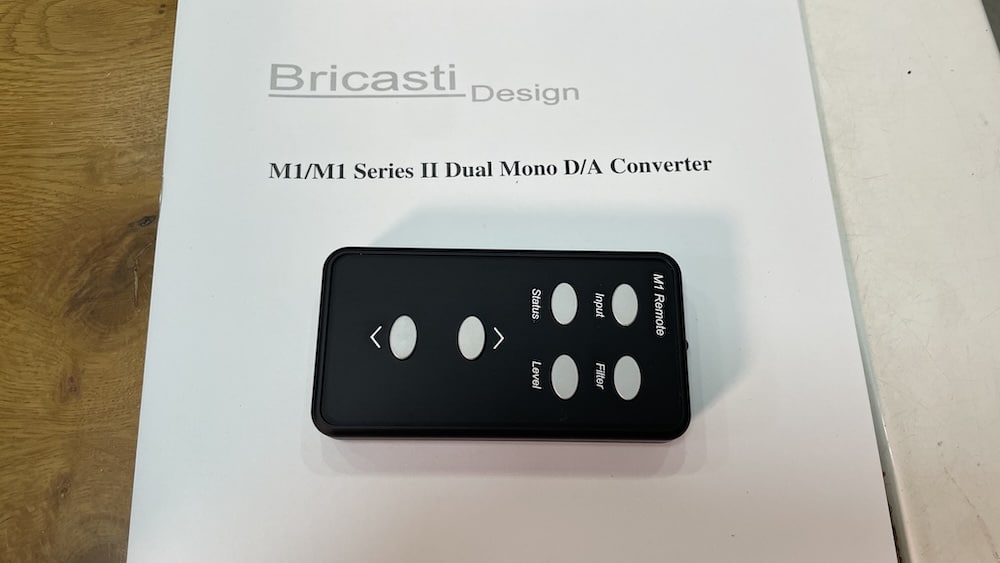
Streaming to the M1 S2 was done via Roon, and the experience was completely smooth and stable. It is even possible to begin streaming while the unit is in standby mode, which adds to the convenience of daily system use. This thoughtful approach continues with the supplied remote control: a minimalist metal handset, solidly built, that mirrors the logic of the front panel. It includes dedicated buttons for inputs, volume level, filter, and status, and instead of a rotary selector, it uses two arrow buttons for precise adjustments.
Less frequently used functions, such as selecting between digital filters or configuring system settings like triggers, felt somewhat less user-friendly to me. The use of technical terminology, combined with navigating a relatively large number of filters using only the rotary control, makes the process slightly cumbersome. That said, these are operations most users will perform infrequently, perhaps only once during initial setup, so their overall impact on the user experience remains limited.
The Listening Test
The listening evaluation of the Bricasti Design M1 S2 consisted of several parts: a comparison of digital filters, an assessment of its performance as a streaming source, and most notably, a direct comparison with another high-end DAC in a similar price category – the MSB Discrete DAC.
Before addressing the listening impressions themselves, it is important to describe the setup and configuration. My initial intention was to connect the DAC to the Nagra Classic Int integrated amplifier via XLR cables. However, after checking voltage matching, I found that the M1 S2’s output level is approximately 5.2V RMS (with the manual indicating that internal adjustment is possible), while the amplifier’s XLR input can be set to either 2V or 10V in Pro mode. Since changing this setting requires adjusting small switches on the rear panel, I ultimately chose to use an RCA connection instead.
Before diving into detailed comparisons, I listened to the M1 S2 for several days. My initial impression was that this is a DAC of very high quality, with standout characteristics including a large soundstage, excellent channel separation, and an exceptionally low noise floor that enables impressive dynamic expression.
Digital Filters
I must admit that digital filters are among my least favorite topics. They are often presented in a technical and somewhat dry manner, typically without a particularly user-friendly explanation, and at times they can even be confusing. In most DACs I have reviewed that offered multiple filter options, I concluded that the differences did not justify the time and effort required to identify them. I generally prefer when manufacturers either choose what they consider the optimal balance for the user or present the subject in a more accessible way, explaining in practical terms what the filters actually affect.
With the Bricasti Design M1 S2, the company has taken the concept quite far. For PCM playback, there are eight Linear Phase filters and six Minimum Phase filters available, in addition to a separate group of filters for DSD content. The selection process itself is straightforward, yet the sheer number of options makes it somewhat less convenient in practice. Filters are changed via the Filter button on the unit or remote, cycling sequentially through the options. This means that comparative listening is not particularly intuitive: for example, switching between Filter 0 and Filter 5 requires stepping through multiple intermediate options each time. There is no way to store preferred filters or create shortcuts, so in this regard the user experience is not especially advanced.
In principle, digital filters do not alter the tonal balance of the music – they do not make it brighter or darker – but rather influence how the digital signal is reconstructed in time. Put simply, they affect the attack and decay of notes, the perception of space, and the overall character of the presentation. Linear Phase filters preserve uniform timing across frequencies and therefore tend to sound more focused and precise, with sharp imaging and a well-defined soundstage, though sometimes slightly analytical. Minimum Phase filters, on the other hand, sacrifice perfect time alignment in order to avoid pre-ringing, often resulting in a more natural and fluid presentation, with a softer, more organic attack and a certain sense of “analog-like” character. The differences are usually subtle, but in a transparent system and over extended listening sessions, changes in musical character and presentation can be perceived.
It is generally advisable to evaluate filter differences using acoustic music – piano, jazz, or vocal recordings – rather than complex or heavily layered rock, where distinctions are harder. Given the large number of filters, I chose to focus on just two: Minimum 0 and Linear 0. The comparison was performed using a local file in order to minimize external variables such as network conditions or streaming service performance. The selected track was “Old Love” performed by Eric Clapton from the 1992 MTV Unplugged performance, played from a FLAC file at 44.1kHz/16-bit resolution.
My personal preference leaned toward the Minimum 0 filter, which delivered a smoother and richer presentation of both guitar and keyboards. I would not describe the difference as dramatic, yet over longer listening sessions I found the Minimum Phase filter more pleasing and slightly less prone to listening fatigue. Regardless of filter choice, the overall presentation of the DAC was impressive: a wide, three-dimensional soundstage, a highly tangible sense of audience presence and placement, excellent instrument separation, high resolution, and an exceptionally quiet background.
Comparison of the Internal Streamer vs. Nagra Streamer
In the second part of the listening test, I compared the performance of the internal streamer of the Bricasti Design M1 S2 with my reference streamer, the Nagra Streamer, which was connected to the DAC via a Nordost Blue Heaven coaxial cable.
Before addressing the sonic aspects, it is important to note the operational differences. The M1 S2’s internal streamer supports only dedicated platforms such as Roon and Audirvana, whereas the Nagra Streamer offers a broader range of options, including Spotify Connect, Tidal Connect, and Qobuz Connect, alongside more general protocols such as AirPlay and DLNA. On the other hand, in terms of digital connectivity, the Nagra Streamer relies on a coaxial output and supports resolutions up to 192kHz and DSD64, with higher resolutions such as DSD256 available only via the company’s proprietary N-Link connection.
The first track I used was “Preacherman” by Melody Gardot, played from a local FLAC file 44.1kHz/16-bit. Through the M1 S2’s internal streamer, the presentation was slightly more dynamic, with a subtly more pronounced bass and a greater sense of overall energy. In contrast, via the Nagra Streamer, the sound was more relaxed and softer, with the midrange given slightly more presence and the vocal presented a touch more clearly. The difference was not dramatic, but it was certainly perceptible, particularly in terms of character and energy.
A similar pattern emerged with “8 Prinzessinnen” by Monika Roscher Bigband from the album Witchy Activities and the Maple Death. Despite being a complex, dynamic, and energetic prog-rock piece, the overall character remained consistent: the M1 S2 delivered a slightly more dramatic and lively sound, while the Nagra leaned toward a more relaxed, slightly more balanced, and somewhat softer presentation. I therefore do not believe there is a clear “winner” here, the choice will largely come down to personal taste. Listeners seeking greater dynamics and energy may prefer the Bricasti streamer, while those who favor relaxed, balanced, and a more prominent midrange may find the Nagra streamer more suitable.
In any case, the very fact that the M1 S2’s internal streamer can compete head-to-head with a high-quality external streamer is a significant achievement, reflecting the level of investment and execution that Bricasti has applied to this aspect of the product as well.
Comparison with a DAC in the Same Price Category: MSB Discrete DAC
In the central part of the listening evaluation, I compared the sonic performance of the Bricasti Design M1 S2 with my reference DAC, the MSB Discrete DAC, equipped with two external power supplies. This is a particularly interesting comparison, as both DACs occupy a similar price range and target a comparable audience.
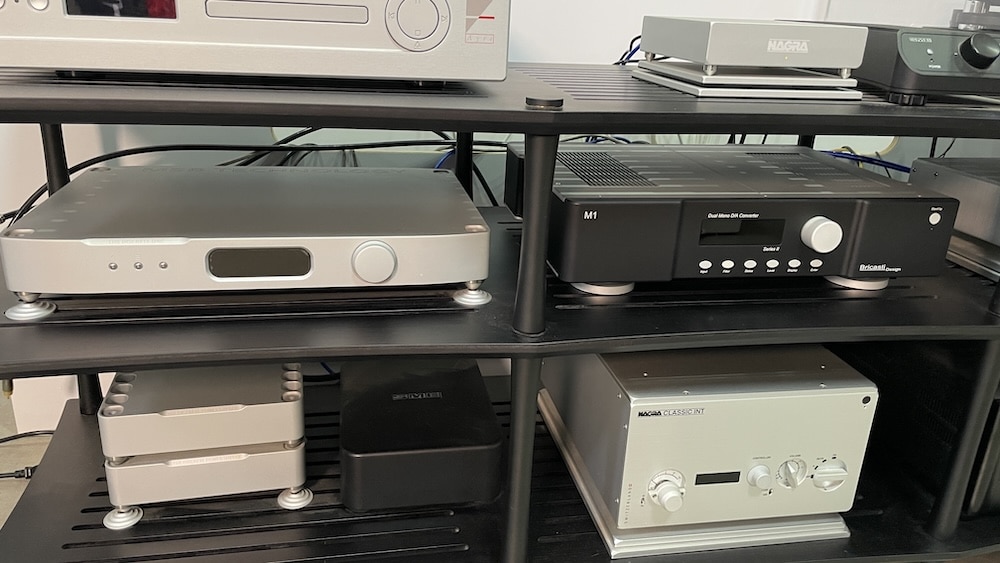
Before addressing the sound performance itself, it is worth briefly noting the differences in approach. From a design perspective, the M1 S2 follows a solid, industrial, and clean aesthetic, while the MSB conveys a more modern and sleek character. On the other hand, the M1 S2’s display is considerably more informative and practical, and I found its substantial feet more impressive than the spike-based solution used by the MSB. In terms of features, the M1 S2 arrives with a comprehensive set of inputs as standard, whereas the Discrete DAC offers fewer inputs in its base configuration but compensates with a flexible modular architecture, allowing additional modules to be added over time, including new connection options developed after the product’s initial launch. In both cases, an optional internal streamer can be integrated, primarily based on dedicated platforms such as Roon, though without native support for services like Spotify Connect or Tidal Connect.
When it comes to sound performance, we enter what could be described as the realm of “audiophile subtleties” – differences that are most apparent in direct comparison and less noticeable during separate, long-term listening. For this evaluation, I connected both DACs to the Nagra Streamer via coaxial connection, in order to isolate the DAC section alone.
On “Beautiful Life” performed by Chantal Chamberland in DSD64, the M1 S2’s exceptionally low noise floor stood out, competing convincingly with the level achieved by the MSB despite its external power supplies. Through the Bricasti, the bass sounded soft, deep, and well separated, while the vocal revealed layers of nuance and refined micro-dynamics. Through the MSB, there was a slightly softer presentation of both piano and vocal delivery, whereas the M1 S2 came across as marginally more dynamic.
A similar outcome was observed with “In My Heart” by Youn Sun Nah in FLAC 48kHz/24-bit. Here too, the differences were subtle, with a slight edge in perceived dynamism favoring the Bricasti, compared to a softer and perhaps marginally more balanced presentation from the MSB. At the same time, the similarities between the two DACs were striking: both deliver a wide, three-dimensional soundstage, high resolution, excellent separation between layers and effects, a large and detailed vocal image, and an exceptionally clean background. Ultimately, the choice between them is likely to depend more on personal preferences regarding presentation and character than on any significant technical gap.
Summary
In conclusion, the Bricasti Design M1 S2 left a strong impression on me, both in terms of its high level of build quality and finish, and in its sonic performance. It is a carefully executed product that feels solid and dependable, conveying a consistent sense of serious engineering throughout.
From a sonic perspective, in previous comparisons between digital products I have reviewed and my reference system, comprising the Nagra Streamer and the MSB Technology Discrete DAC, my system has typically demonstrated a clear advantage, or at the very least a distinctly different character. In this case, however, the Bricasti proved to be an impressively capable and evenly matched contender. The differences I perceived were confined to the realm of audiophile subtleties – delicate nuances of tonality, dynamics, and presentation – differences that are unlikely to materially affect the experience of the vast majority of audio enthusiasts.
Beyond matters of personal preference, it is fair to say with confidence that the Bricasti Design M1 S2 delivers a complete, balanced, and mature package, positioning it as one of the more compelling and convincing DACs in its category.
Price: 45,000 NIS without the Streaming module – Limited time promotion price: 38,995 NIS including Streaming module
Warranty: 1 Year
Importer: Audio Video
The system I used for the review:
Speakers : YG Acoustics Vantage 3
Integrated amplifier : Nagra Classic Int
DAC for comparison: MSB Technology Discrete DAC with two external power supplies
Streamer for comparison: Nagra Streamer
Cables :
RCA cable between the M1 S2 and the amplifier: Nordost Blue Heaven
Coaxial cable between the Nagra Streamer and the DACs: Nordost Blue Heaven
XLR cable between the MSB DAC and the amplifier: Nordost Blue Heaven
Speaker cables : Nordost Blue Heaven
Power:
Power cables for the amplifier, the Nagra Streamer and the MSB DAC: Nordost Blue Heaven
Power Distribution Block : QBASE QB8 Mark II
Power cable for the distribution block: Nordost Red Dawn
HiFi Rack: Quadraspire SV3T Performance